Swimming pool salt water chlorinators chlorination pools
UK
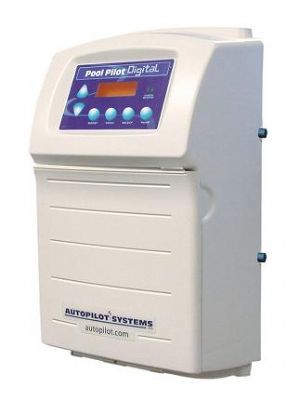
Autopilot Digital
Salt Chlorine Generator
Autopilot Digital Salt Chlorinator has the lowest
minimum salt level of any salt chlorinator on the market, only 2,000ppm.
Market leading technology with a fluorescent digital display which reads
out the salt level and calculates how much salt needs to be added to
prevent overdosing.
Displays temperature, flow and diagnostics.
Choice of super chlorination modes (24 and 72 hrs).
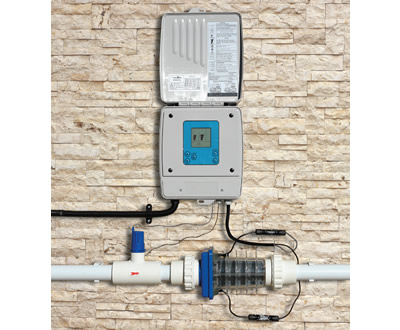
Patented bypass manifold system for ease of installation and efficient
chlorine delivery.
Self cleaning cell which operates in water up to 40 deg C and a salt
content up to 35,000ppm.
Built-in temperature compensation for output and freeze protection for
over winter.
Time clock to operate the pump built-in and push button controls.
Check compatibility of heating equipment prior to installation.
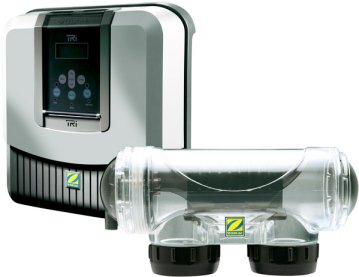
PH Controller (Acid Only)
for use with all TRi salt chlorinators
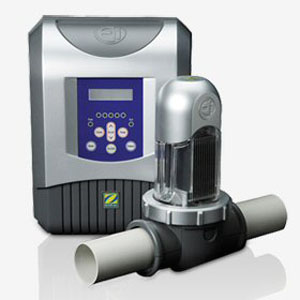
Zodiac Ei Swimming
Pool Salt Chlorinator/Controller
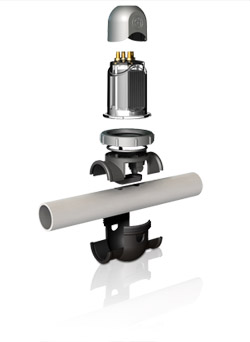
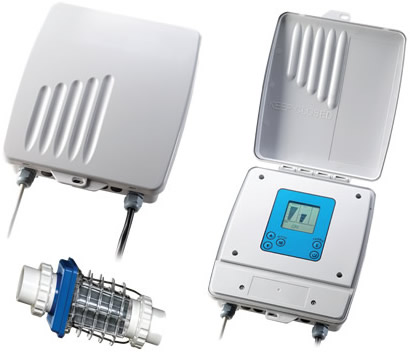
Exploded image of the Salt Chlorine Generator
The worlds easiest to install, operate and maintain
chlorinator, Ei can be installed and set up in less than 15 minutes
and best of all you can do it yourself.
Ei Saltwater Pool Chlorinator Features:
Convert to a healthy saltwater pool and eliminate the need for liquid
chlorine.
Installs easily with the patented DIY 'quick fit' drill and
clamp system.
Set up is a breeze simply set the clock, timers and desired output,
add salt to the pool and you're done.
Low maintenance electrolytic cell, with automated self-cleaning function
(reverse polarity)
Ei Can be installed in 10 minutes using a 'QuickFix' no plumbing system
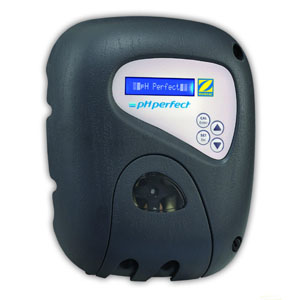
Zodiac pH Perfect
- Includes Probe & Fitting
Pool water pH is the measurement of the water's
potential of hydrogen ions (H+ ion concentration). Its value ranges
from 0 to 14: 0 is highly acidic, 7 is neutral and 14 is highly alkaline.
Controlling your pool’s pH levels is vital to the enjoyment you get from
your pool. For the comfort of pool users, the pH of the water should be maintained
between 7.2 and 7.4. Below this value, the water is aggressive and above it,
larger doses of disinfectant and pool chemicals are required to keep the water
healthy and prevent the formation of algae. The pH Perfect™ system
frees you from the usual water treatment chores that come with owning
a pool. Remember that unless the pH is properly regulated, manual treatments
are both risky and expensive and can affect other pool devices such
as the cleaner.
Benefits:
Automatically measures your swimming pool’s pH using a highly
sophisticated sensor/probe that can measure changes as small as 0.03
in your pH level.
Automatically adjusts output to keep the pH continually balanced in
your pool. pH Perfect™ will automatically adjust for fluctuations
in bather load and weather fluctuations.
pH Perfect™ feeds acid directly into the return line, after all
other equipment, to ensure your pool equipment does not get damaged.
Chlorine reverts back to salt after disinfecting the water
Ongoing process recycles the salt
LCD display high/low salinity indicator
Adjustable Chlorine production
Adjustable Chlorine boost button
Safety flow switch
Robust self cleaning cell
What does it do?
Outstanding water quality:
Swim in a pool fitted with an AquaBlue salt water purifier and feel
the difference. Your pool water will feel silky soft. No more dry
skin and red eyes.
Advanced cell design:
The transparent cell ensures easy visual checks and minimal maintenance.
Proven technology:
More pools than ever are moving to AquaBlue. Over 90% of pools in Australia
now use salt technology.
Easy to use:
User friendly digital display with simple and instant operation buttons
Attractive modern design:
Very attractive casing, totally sealed and waterproof with no ventilator
or air vents.
Example: A freshly filled pool with a water volume of 50,000 litres
(11,000 gallons) will require 200kg of salt. Add the required amount
of salt, wait one hour and test the salt level with Aquachek Salt Strips.
Add more salt if the reading is below 4500ppm (parts per million).